Your definitive guide to Bali — the best areas to stay, temples to visit, things to do, where to eat, visa rules, and how to plan the perfect trip to the Island of the Gods.
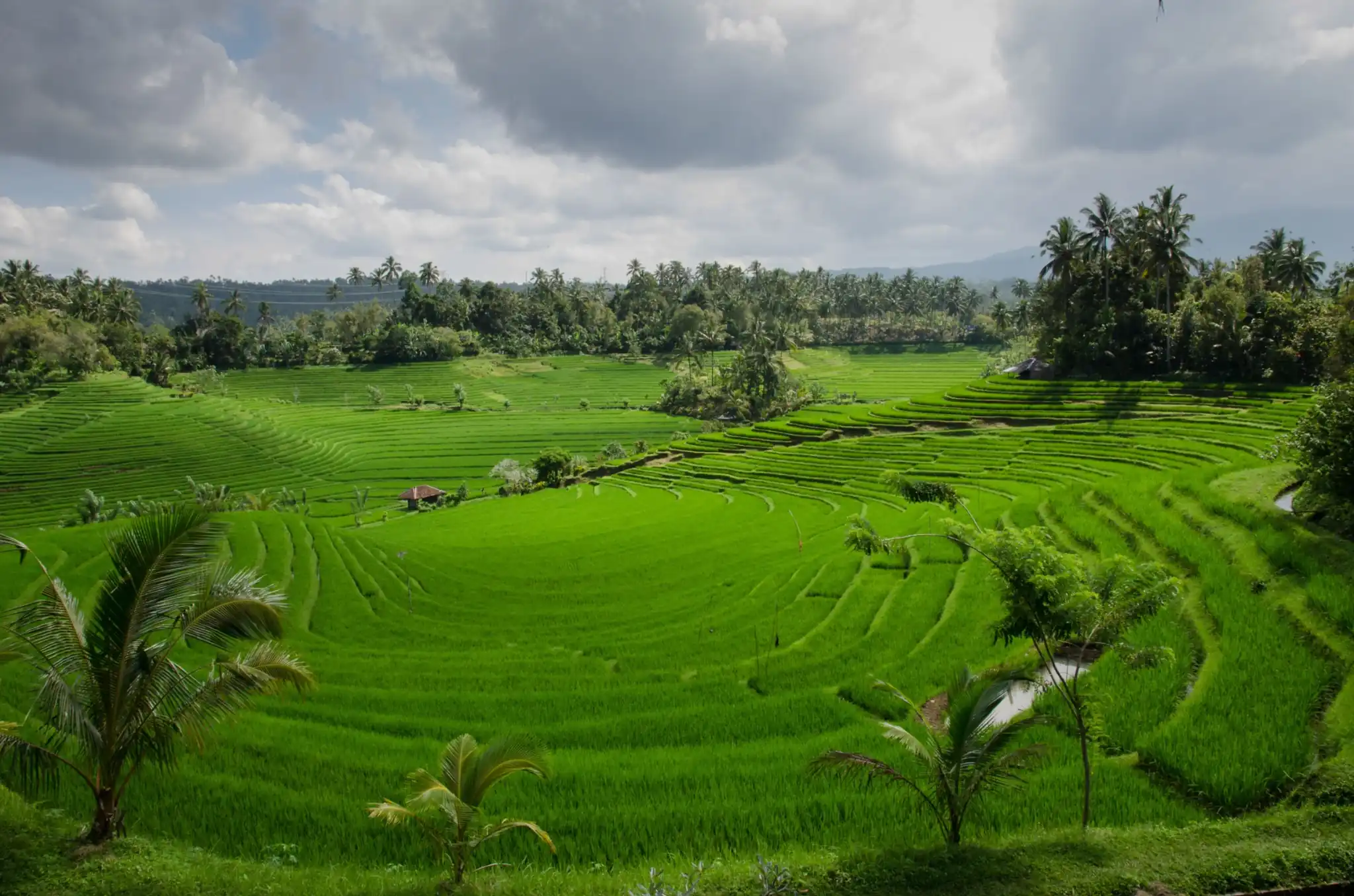
Bali is one of those rare places that lives up to its reputation — and then exceeds it. The island sits at the western end of the Lesser Sunda Islands in Indonesia, roughly 8 degrees south of the equator, and it packs an extraordinary variety of experiences into an area barely larger than Goa. Ancient Hindu temples rise from clifftops above the Indian Ocean. Terraced rice fields cascade down volcanic hillsides in greens so vivid they look painted. World-class surf breaks roll in off the Bukit Peninsula. And in between, a culture of genuine warmth, ceremony, and devotion plays out in daily life at every street corner.
For Indian travellers in particular, Bali holds a special resonance — it is the only place outside the subcontinent where Hindu culture has been preserved in living, unbroken practice for over a thousand years. The similarities in ritual, iconography, and festival life are striking and moving. This guide covers everything you need to plan a trip that goes beyond the tourist circuit.
Best Time to Visit Bali
Bali has two distinct seasons — dry and wet — and both have their merits. The island sits in the tropics, so temperatures stay between 24°C and 32°C year-round.
| Season | Months | Weather | Best For |
|---|---|---|---|
| Dry Season | Apr – Sep | Low humidity, little rain, sunny | Beaches, outdoor activities, trekking |
| Shoulder | Oct, Mar | Occasional showers, fewer crowds | Budget travel, photography |
| Wet Season | Nov – Feb | Daily rain (usually afternoon), lush green | Culture, temples, rice field walks |
| Peak Crowd | Jul – Aug | Dry but very busy and expensive | Festivals, nightlife |
Visa Information for Indian Travellers
Indonesian visa rules for Indian passport holders have changed significantly in recent years. Here is the current position as of 2026.
Visa on Arrival (VoA)
Indian nationals are eligible for a Visa on Arrival at Ngurah Rai International Airport in Denpasar. The VoA costs IDR 500,000 (approximately ₹2,700 / USD 30) and is valid for 30 days. It can be extended once at an immigration office in Bali for another 30 days, giving you a maximum stay of 60 days.
e-Visa on Arrival
Indonesia also offers a pre-purchased e-VoA through the official molina.imigrasi.go.id portal. Buying online before travel means you skip the VoA queue at the airport — highly recommended during peak season when queues can take 60–90 minutes.
- Valid passport with at least 6 months validity from date of arrival
- Return or onward ticket
- Proof of accommodation (hotel booking or host address)
- Sufficient funds (approx. USD 1,000 or equivalent recommended)
- VoA fee: IDR 500,000 (cash or card accepted at airport)
How to Get to Bali
By Air
Ngurah Rai International Airport (DPS) in Denpasar is Bali's only international airport. From India, the most common routes are from Delhi (direct on IndiGo and Air Asia, ~7.5 hrs), Mumbai (direct ~6.5 hrs), and Bangalore (1 stop via Singapore or Kuala Lumpur). Budget carriers like AirAsia, Scoot, and Batik Air often have the best fares when booked 6–8 weeks in advance.
| Route | Airlines | Approx. Flight Time | Approx. Fare (return) |
|---|---|---|---|
| Delhi – Bali | IndiGo, AirAsia, Air India | 7–8 hrs (direct) | ₹28,000 – ₹55,000 |
| Mumbai – Bali | IndiGo, Scoot via Singapore | 6.5–10 hrs | ₹25,000 – ₹48,000 |
| Bangalore – Bali | AirAsia via KL, Scoot via SIN | 8–12 hrs | ₹22,000 – ₹45,000 |
| Chennai – Bali | Via Kuala Lumpur or Singapore | 9–13 hrs | ₹24,000 – ₹46,000 |
Getting Around in Bali
Bali has no public bus network worth using for tourists. The main options are ride-hailing apps (Gojek and Grab are both excellent and very affordable), private car hire with driver (recommended for day trips — roughly IDR 500,000 / ₹2,700 for a full day), and scooter rental (IDR 70,000–100,000 / ₹400–₹550 per day). Renting a scooter gives you the most freedom but requires an international driving permit and comfort on narrow, busy roads.
Where to Stay — Bali's Best Areas
Bali is larger than most first-timers expect, and choosing the right base matters. Each area has a completely different character.
Seminyak & Kerobokan — Style and Sunset
Seminyak is Bali's most upscale beach neighbourhood — a dense strip of boutique hotels, rooftop bars, design shops, and excellent restaurants running parallel to a long black-sand beach. The sunsets here are legendary. Kerobokan, just north, is quieter and increasingly popular with longer-stay visitors. Best for: couples, foodies, nightlife, first-timers who want comfort.
Ubud — Culture, Rice Fields, and Wellness
Set in the forested hills of central Bali, Ubud is the island's cultural heart. The town is surrounded by rice terraces, traditional villages, and some of Bali's finest temples. It's also the centre of the island's yoga and wellness scene, with dozens of retreat centres and healing practitioners. The Monkey Forest, the Royal Palace, the art market, and some of Bali's best restaurants are all here. Best for: culture, art, trekking, wellness, longer stays.
Canggu — Surf and the Digital Nomad Scene
Canggu has evolved from a quiet surf village into Bali's most fashionable neighbourhood over the past decade. The beach break at Batu Bolong is ideal for intermediate surfers. The cafes and co-working spaces are numerous and excellent. It's younger, less polished than Seminyak, and genuinely fun. Best for: surfers, young travellers, longer stays, digital nomads.
Uluwatu & Bukit Peninsula — Cliffs and World-Class Surf
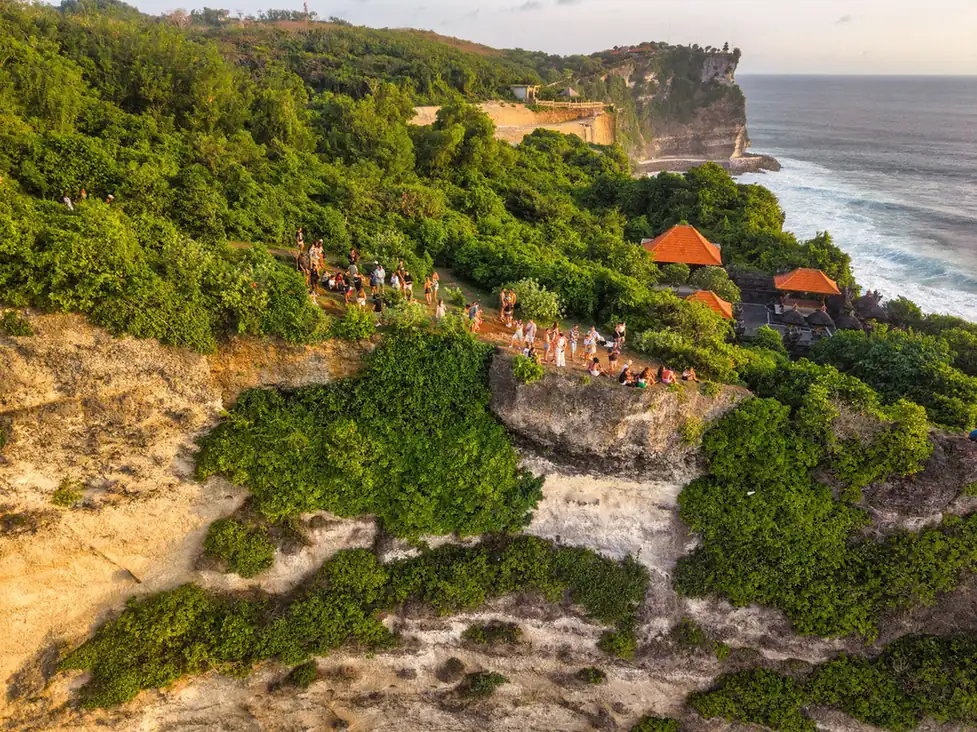
The Bukit Peninsula in Bali's south is a limestone plateau that drops to the ocean in dramatic white cliffs. The surf here — Uluwatu, Padang Padang, Bingin — is among the best in the world. The clifftop Uluwatu Temple is one of Bali's most atmospheric sights. Accommodation ranges from basic surfer digs to genuinely extraordinary cliff-edge villas. Best for: surfers, honeymooners, those seeking seclusion.
Sanur — Calm and Family-Friendly
Sanur is Bali's most relaxed resort town — a wide beachfront promenade, calm lagoon waters safe for children and non-swimmers, and a distinctly unhurried pace. It's also the departure point for fast boats to Nusa Penida and Nusa Lembongan. Best for: families, older travellers, those who want calm over buzz.
| Area | Vibe | Budget (hotel/night) | Mid-range (hotel/night) |
|---|---|---|---|
| Seminyak | Stylish, beach, nightlife | ₹2,500 – ₹4,000 | ₹6,000 – ₹15,000 |
| Ubud | Culture, nature, wellness | ₹1,500 – ₹3,000 | ₹4,500 – ₹12,000 |
| Canggu | Surf, cafes, young crowd | ₹2,000 – ₹4,000 | ₹5,000 – ₹14,000 |
| Uluwatu | Cliffs, surf, seclusion | ₹2,500 – ₹5,000 | ₹7,000 – ₹25,000 |
| Sanur | Calm, families, easy | ₹1,800 – ₹3,500 | ₹4,000 – ₹10,000 |
Places You Must Visit in Bali
Tanah Lot Temple
Built on a rocky outcrop in the sea, Tanah Lot is one of Bali's most photographed landmarks and one of its holiest sea temples. It is accessible on foot at low tide. The sunset from the surrounding clifftops is spectacular. Arrive at least an hour before sunset to find a good position — it gets crowded. Entry: IDR 60,000 (₹330).
Uluwatu Temple (Pura Luhur Uluwatu)
Perched on a 70m sea cliff at the southwestern tip of the Bukit Peninsula, Uluwatu is one of Bali's six directional temples and one of the most dramatically situated religious sites in all of Southeast Asia. The Kecak fire dance performed here at sunset (IDR 150,000) is one of Bali's great cultural experiences — arrive early for front-row seats. Beware the resident macaques, who are skilled thieves.
Tegallalang Rice Terraces
The terraced rice fields north of Ubud are among the most beautiful agricultural landscapes in the world — a complex system of subak (traditional irrigation) carved into steep hillsides over centuries, now a UNESCO World Heritage Site. Morning is best for photography. The main viewing area has become commercialised with swings and ziplines — walk 10 minutes further along the ridge for quieter views.
Mount Batur Sunrise Trek
Mount Batur (1,717 m) is an active volcano in Bali's mountainous north, and the sunrise trek to its summit is one of the island's definitive experiences. The 2-hour climb begins at 4 AM and rewards you with views over the caldera lake, surrounding peaks, and — on clear days — Lombok's Mount Rinjani. Guides are compulsory (booked through the local guides association, approximately IDR 350,000 / ₹1,900 per person). No special fitness level is required.
Tirta Empul Temple
This 10th-century water temple near Tampaksiring is one of Bali's most sacred sites. Its spring-fed purification pools have been used for ritual bathing (melukat) for over a thousand years. Visitors are welcome to participate in the purification ritual — wearing a sarong (provided or rented at the entrance) and entering the holy spring water through a sequence of ornate spouts. Entry: IDR 50,000 (₹275).
Nusa Penida
The island of Nusa Penida, 45 minutes by fast boat from Sanur, has become one of Southeast Asia's most dramatic day-trip destinations. Kelingking Beach — a T-rex shaped cliff with a white crescent beach below — is the most shared image in Bali's recent tourism history. Angel's Billabong (a natural infinity pool at the ocean's edge), Broken Beach, and Crystal Bay for snorkelling with manta rays round out the highlights. Come on a weekday to avoid the worst crowds.
Ubud Sacred Monkey Forest
This nature reserve and temple complex in the heart of Ubud is home to over 1,000 long-tailed macaques living among ancient moss-covered temples and towering fig trees. It is genuinely atmospheric — especially early morning before the crowds arrive. Keep your belongings secured and don't bring food. Entry: IDR 80,000 (₹440).
Besakih Temple — Mother Temple of Bali
Pura Besakih is Bali's largest and most important temple complex, perched on the slopes of Mount Agung at 1,000 m. It comprises 23 separate temples spread across the mountainside and has been a place of worship for over 1,000 years. Entry: IDR 60,000. Hire a local guide directly at the site — they are knowledgeable and it supports the local community.
Suggested Itineraries
5-Day First-Timer Itinerary
- Day 1 — Arrive Denpasar, transfer to Seminyak. Beach sunset, dinner at Jalan Kayu Aya.
- Day 2 — Seminyak beach morning. Afternoon: Tanah Lot Temple for sunset.
- Day 3 — Transfer to Ubud. Tegallalang Rice Terraces, Tirta Empul Temple, Ubud market.
- Day 4 — Mount Batur sunrise trek (early start). Afternoon rest. Evening Kecak dance at Uluwatu.
- Day 5 — Uluwatu morning, Padang Padang beach. Transfer to airport.
8-Day Complete Bali Circuit
- Day 1 — Arrive, settle into Seminyak or Canggu.
- Day 2 — Seminyak: beach, Potato Head, Ku De Ta sunset bar.
- Day 3 — Tanah Lot in the afternoon. Explore Kerobokan's restaurants.
- Day 4 — Transfer to Ubud via Tanah Lot. Monkey Forest, Ubud Palace.
- Day 5 — Tegallalang Rice Terraces, Tirta Empul, Kintamani volcanic views.
- Day 6 — Mount Batur sunrise trek. Rest. East Bali: Besakih Temple.
- Day 7 — Day trip to Nusa Penida (fast boat from Sanur). Kelingking, Broken Beach, Crystal Bay.
- Day 8 — Transfer to Uluwatu. Kecak dance sunset. Late dinner, airport transfer.
Where to Eat in Bali
Bali's food scene is extraordinary and spans everything from IDR 20,000 (₹110) warung meals to world-class tasting menus. The best eating in Bali is often the simplest.
Must-Try Balinese Dishes
- Babi Guling — Balinese spit-roasted suckling pig, seasoned with turmeric, ginger, and galangal (note: contains pork)
- Bebek Betutu — slow-cooked duck wrapped in banana leaves with a complex spice paste, cooked overnight
- Nasi Campur — mixed rice plate with small portions of various dishes, the Balinese answer to a thali
- Lawar — minced meat and vegetable salad with fresh coconut and spices
- Sate Lilit — Balinese minced fish or chicken satay wrapped around lemongrass skewers
- Jajan Bali — traditional Balinese sweets and rice cakes, sold at morning markets
- Es Campur — shaved ice dessert with coconut, jackfruit, and palm sugar syrup
Recommended Restaurants
| Restaurant | Location | Cuisine | Price Range |
|---|---|---|---|
| Warung Babi Guling Ibu Oka | Ubud | Traditional Balinese | ₹300 – ₹600 |
| Locavore | Ubud | Modern Indonesian tasting menu | ₹6,000 – ₹12,000 |
| Mozaic | Ubud | French-Indonesian fine dining | ₹8,000 – ₹18,000 |
| Merah Putih | Seminyak | Modern Indonesian | ₹2,500 – ₹6,000 |
| La Favela | Seminyak | International, great cocktails | ₹2,000 – ₹5,000 |
| The Shady Shack | Canggu | Vegetarian / vegan, all-day breakfast | ₹800 – ₹2,000 |
| Single Fin | Uluwatu | Burgers, pizza, sunset views | ₹1,000 – ₹2,500 |
| Naughty Nuri's | Ubud | BBQ ribs, cold Bintang | ₹1,200 – ₹3,000 |
Budget Breakdown for Bali
Bali can be done on almost any budget. Here's a realistic daily breakdown for Indian travellers.
| Category | Budget (₹/day) | Mid-range (₹/day) | Comfort (₹/day) |
|---|---|---|---|
| Accommodation | ₹1,500 – ₹3,000 | ₹4,000 – ₹9,000 | ₹12,000 – ₹30,000 |
| Food (3 meals) | ₹600 – ₹1,200 | ₹1,500 – ₹3,500 | ₹4,000 – ₹10,000 |
| Transport | ₹300 – ₹600 | ₹800 – ₹2,000 | ₹2,500 – ₹5,000 |
| Activities / entry fees | ₹400 – ₹800 | ₹1,000 – ₹2,500 | ₹2,500 – ₹6,000 |
| Total per day | ₹2,800 – ₹5,600 | ₹7,300 – ₹17,000 | ₹21,000 – ₹51,000 |
A 7-day trip from India (including return flights, visa, accommodation, food, and activities) can realistically be done for ₹60,000 – ₹80,000 per person on a budget, ₹1,20,000 – ₹1,80,000 mid-range, and ₹2,50,000 – ₹5,00,000+ in comfort.
Cultural Etiquette in Bali
Bali is a deeply religious Hindu society and visitors are expected to show respect, particularly around temples and ceremonies. The Balinese are extraordinarily gracious hosts — but that grace should not be mistaken for indifference to how you behave in their sacred spaces.
- Always wear a sarong and sash when entering a temple — these are provided or rented at all major sites
- Women who are menstruating are not permitted to enter temples (this is a longstanding Balinese belief, and respected locally)
- Never point your feet toward a shrine, offering, or person sitting higher than you
- Step over, not on, the small canang sari (flower offerings) placed on the ground throughout the day
- Dress modestly in villages and inland areas — shoulders and knees covered is appreciated
- Ask before photographing people, ceremonies, or the interior of temples
- Do not climb or sit on temple structures for photographs
- Silence is appropriate during active ceremonies — watch from a respectful distance
- The left hand is considered unclean — give and receive things with your right hand
Practical Tips for Bali
- Currency: Indonesian Rupiah (IDR). 1 INR ≈ 180 IDR approximately (check current rate). Carry some cash — warungs and smaller shops are cash-only.
- ATMs: Widely available in tourist areas. Use bank ATMs (BCA, BNI, Mandiri) rather than independent ATMs which charge higher fees and have been known for skimming.
- SIM card: Buy a local SIM at the airport (Telkomsel or XL). 30-day data plans start at IDR 100,000 (₹550). Indonesia requires SIM registration with your passport.
- Electricity: 220V, Type C/F plugs (same as most of Europe and India's round-pin devices work fine).
- Water: Do not drink tap water. Buy bottled water or carry a filter bottle.
- Bargaining: Expected at markets and for souvenir shopping. Never appropriate at fixed-price restaurants or official ticket counters.
- Bali belly: Common for first-timers. Be careful with ice, unpeeled fruit, and street food in the first 48 hours while your gut adjusts.
- Taxi scams: Fixed-price official Blue Bird taxis or Gojek/Grab are safe. Avoid unlicensed touts at the airport.
- Health: No vaccinations are mandatory for Bali but Hepatitis A, Typhoid, and updated Tetanus are recommended. Travel insurance with medical cover is strongly advised.
- Photography: Drones require a permit from Indonesia's Directorate General of Civil Aviation. Flying drones near temples or ceremonies without permission is both illegal and disrespectful.
"Bali doesn't seduce you with spectacle. It draws you in quietly, through a temple at dusk, a gamelan heard from behind a wall, the smell of incense and frangipani at a crossroads shrine — and by the time you notice, you're already thinking about coming back."
— Lama Travels field journal
Is Bali Right for You?
Bali works for almost every kind of traveller — and that is both its greatest strength and its occasional challenge. The parts of the island closest to the main tourist circuit can feel hectic and over-commercialised. But step even slightly off the well-worn path — into a village in the foothills of Batukaru, or along the back roads between Ubud and Sidemen — and you find a Bali that is quieter, more real, and genuinely extraordinary.
For Indian travellers, Bali carries an additional layer of meaning that most Western visitors don't experience: the recognition. The temples, the ceremony, the offerings, the iconography — it is at once foreign and familiar in a way that is quietly profound. Come with curiosity, respect the culture, and Bali will give you more than you expected.